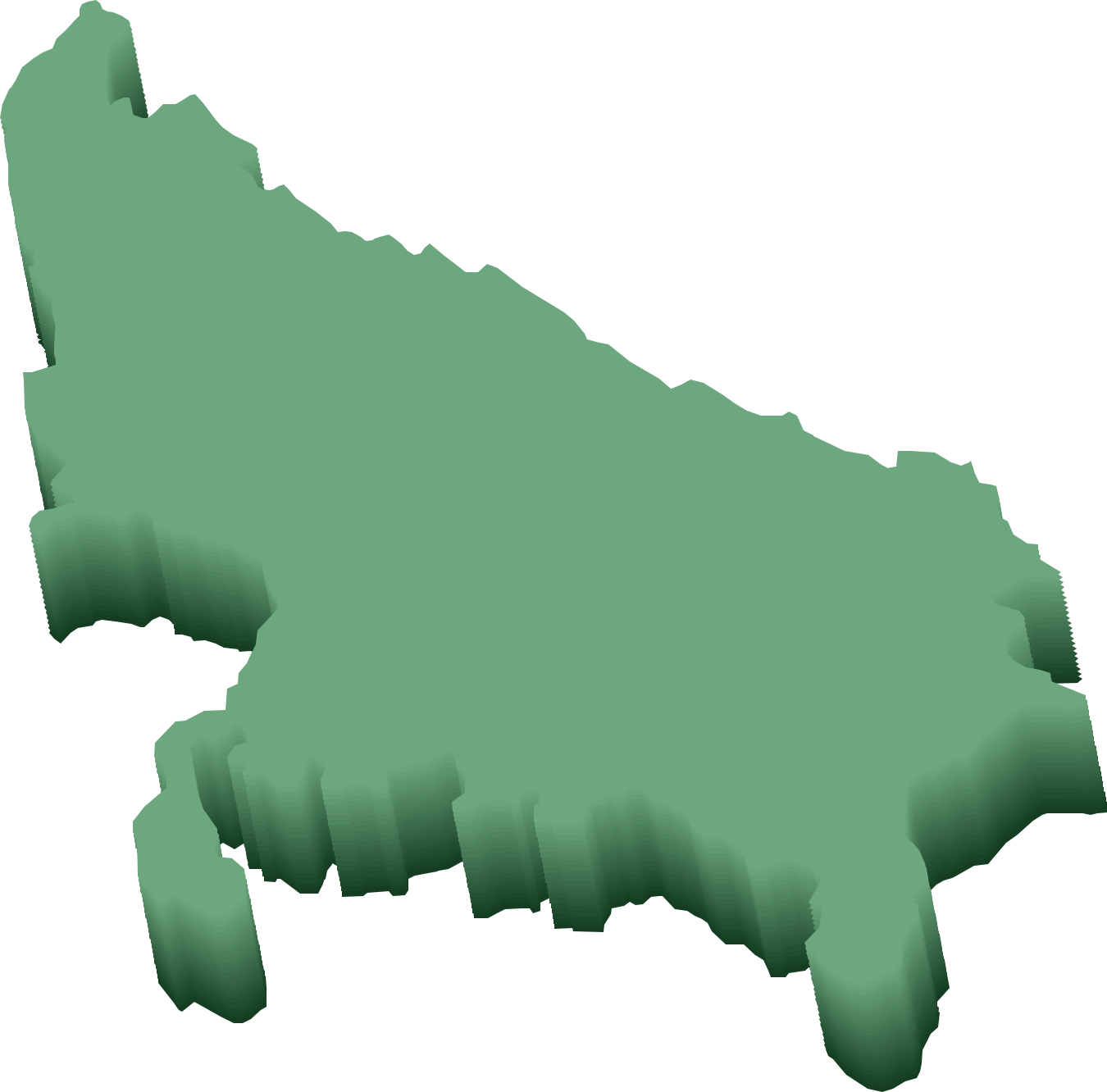
About Lalitpur District (Uttar Pradesh)
Lalitpur district, a part of Jhansi division is a district of Uttar Pradesh state with its administrative headquarters located at Lalitpur town. Earlier Lalitpur district was a part of the Chanderi state. A Bundela Rajput who was descended from Rudra Pratap Singh of Orchha founded the district Lalitpur in the 17th century. In the 18th century Chanderi, along with most of the part of Bundelkhand came under the domination of Maratha. In 1812 Chanderi was annexed by Daulat Rao Sindhia from Gwalior. In the year 1844, British captured the place of Chanderi and the Chanderi district became a part of British India, with its district headquarters located at Lalitpur town. In the Mutiny, 1857, the British lost the territory and only managed to regain it back in 1858. In 1861, a portion of the district i.e. the west of the Betwa, with Chanderi, was returned to Gwalior state. On the other hand the remaining part was renamed as Lalitpur district. From the period of 1891 to 1974 it was a part of Jhansi district but Lalitpur was carved out from Jhansi district in 1974. In the year 1976 Lalitpur was emerged as a separate district in the map of Uttar Pradesh.
Geographically, the district lies at 24°69'N latitude, 78°41'E longitude and 428 m altitude. In the year 2023, there was a total 11.45% forest area of total geographical area. The district encompasses a geographical area of 5,039 sq. km. and it is bounded by Jhansi district on the north, Sagar district and Tikamgarh district of Madhya Pradesh on the east and Guna district of Madhya Pradesh on the west. The climate of district is characterised as sub tropical climate. It remains extremely hot during the summer and fairly cold during the winter. The actual rainfall in the district was 1146.1 mm in the year of 2024-25.
Administration wise, the district is divided into 3 tehsils namely Lalitpur, Mehroni and Talbehat. There are 1 Lok Sabha seat and two Uttar Pradesh Vidhan Sabha constituencies.
According to 2011 census the district has a population of 12,21,592 (persons) including 6,41,011 (males) and 5,80,581 (females). The district has a sex ratio of 906 females for every 1000 males. Furthermore, the district has projected population of 14,89,719 comprising 7,82,742 males and 7,06,977 females for the year 2026. According to the National Family Health Survey (NFHS-5, 2019–21), the district has an estimated sex ratio of 997 females and a child sex ratio of 973 females per 1,000 males. In the year 2001-2011 the population growth rate in the district was 24.94 (persons) out of which 23.41 (males) and 26.68 (females). In the year 2023 the number of live births in the district was 35,829 out of which 18,783 were males and 17,046 were females. In the same year the number of deaths in the district was 6,323 out of which 4,403 were males and 1,920 were females. As per 2001 census the major religion in the district is Hindu with 94.75% of the total population. According to 2011 census the principal language in the district is Hindi with 99.18%.
Agriculture is the backbone of the economy of the district. Some of its chief agricultural crops are rice, soybean, wheat, oilseeds, maize, pulses, barley, jowar, etc. Most of the lands in the district are used for agricultural purpose. More than half of its population are engaged in agriculture since it is scantily industrialized. Only a few industries of stone idol, handloom and brass are available in the district. In 2006 the Ministry of Panchayati Raj declared Lalitpur as one of the country's 250 most backward districts which is currently receiving funds from the Backward Regions Grant Fund Programme (BRGF). In the year 2023-2024 the Gross Domestic Product in the district was Rs. 16,22,714 lakh at current price and Rs. 8,28,891 lakh at constant 2011-2012 prices. The Net Domestic Product in the district during the period 2023-2024 was Rs. 14,06,182 lakh at current price and Rs. 6,95,915 lakh at constant 2011-2012 prices. The Per Capita Income or NDDP, At Factor Cost in the district during the period 2023-2024 was Rs. 94,082 at current price and Rs. 46,561 at constant 2011-2012 prices.
The district is an abode of numerous reputed educational institutions. It also provides platform for higher education. Some of its recognised educational institutions are Sudarshan Degree College, Pahalvan Gurudeen Mahila Mahavidyalya, Nehru Maha Vidyalaya, Government Degree College, Pandit Deendayal Upadhaya Government College, Nagar Palika Girls College etc. As per 2011 census the literacy rate in the district is 63.52% (persons), 74.98% (males) and 50.84% (females). In addition, according to the Periodic Labour Force Survey (PLFS) for the period July 2023-June 2024 estimated literacy rate in the district is 75.34% including 86.79% are males and 63.25% are females (Age 7 Years and Above).
During the year 2023, there were 22,54,629 domestic tourists and 1 foreign tourists who visited these places of the district. Every year numerous travellers from different parts of the country as well as world come to this district in order to enjoy its centres of attraction with historical and religious significance. Deogarh, on the right bank of the Betwa River is located at a distance of 123 km. from Jhansi. The place is full of numerous antique historical monuments of the Guptas, Gurjara-Pratiharas, Gonds, Mughals, Bundelas and Marathas. Jain Tirthankar Shantinath temple is an ancient temple of this place and the shape of its idol is based on religious and ethical background. Barah temple of the district was constructed by the Chandela kings. Some other temples made by them are Gajendra Moksha, Nar-Narayan and Vishnu. The district has also some other notable places of interest such as Neelkantheshwar Trimurti (Pali), Ranchourji, Pavagiri, Devmata, Machkud Ki Gufa, Tuvan Mandir, Ata Mandir, Kshetrapalji Temple, etc.